Listening First, Leading Together: The Formation of the Voices of Women in Leadership Collective
What began as two Fellows naming a personal leadership need has become a Fellow‑directed space
where women leaders are seen, supported, and strengthened by one another.
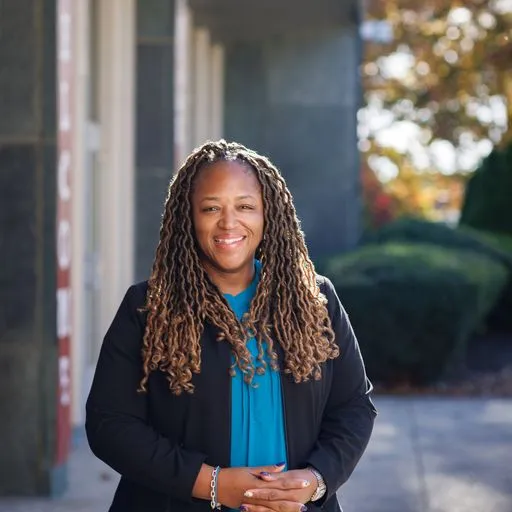
After a Senior Fellow Institute, when the structured sessions had ended and conversation lingered, Dr. Shakeera Warthen‑Canty (2017 Neubauer Fellow, Cohort 3) and Antoinette Powell (2016 Neubauer Fellow, Cohort 2) found themselves returning to a frequent question: what next? Both were growing as leaders, stepping into new roles, and navigating increasingly complex leadership spaces—yet unsure where they, themselves, were being built next. “At the time, we were both asking what was next for us, what was our next step to elevate our leadership” Dr. Warthen‑Canty recalls. Both women were approaching transition points in their careers. Powell was moving into a different school setting and Warthen‑Canty was serving as an assistant superintendent, navigating senior‑level leadership spaces that were often male‑dominated. What they were seeking was not another credential, but a space where they could be heard and affirmed without having to explain their experiences.
They shared those reflections with PASL Executive Director Edwin M. Quezada. There was no proposal—just an honest conversation. What stayed with Warthen‑Canty was not an immediate response, but Edwin’s willingness to listen. “We were having this conversation with Edwin, and he was listening,” she says. “He said, ‘Okay, give me a minute.’” When he returned weeks later, he didn’t come back with a finished plan. Instead, he asked a different question—one that shifted ownership back to the Fellows themselves: What could this look like? That exchange marked the beginning of the Voices of Women in Leadership Collective.
From the outset, PASL’s role was intentional: offer guidance and support, while trusting Fellows to define the space. Edwin encouraged Warthen‑Canty and Powell to build something rooted in lived experience rather than prescribed curriculum.
Initially, neither founder imagined herself as a facilitator. They were looking for a space to join, not one to lead. But as planning began, it became clear that leadership often starts not with certainty, but with proximity to a need.
Planning sessions became the first real work of the Collective. They were not logistical check‑ins, but spaces where facilitators talked honestly about power, gender dynamics, and emotional labor in leadership roles. “Our planning sessions weren’t just, ‘We’re going to do this,’” Warthen‑Canty explains. “We actually went through the emotions. We talked about how we navigate various situations so that we could be best prepared.”
The Collective’s first year was fully virtual. While the format presented challenges, it also allowed women across cohorts to connect in new ways. Over time, the space began to feel less like a program and more like a community. The year ended with an in‑person gathering, and the shift was immediate. Conversation slowed. Reflection deepened. “There were many emotions,” Warthen‑Canty says. “Because even though we were talking about leadership, it affects the personal lives of the women in the collective, and it also shows up in the work.”
What formed were real relationships—ones that extended beyond scheduled sessions. Women began reaching out to one another during difficult moments at work, talking through decisions, and preparing for challenging conversations. “One of the young ladies in the collective was going through a really rough patch at work,” Warthen‑Canty recalls. “I became someone she could call or stop by my office to talk with. We would work through things together and prepare her to go back into the situation.” Those moments revealed the deeper impact of the Collective. It was not just a place for reflection, but a space where allies were formed—across districts, roles, and cohorts.
Now in its second year, the Collective’s structure has evolved in response to participant feedback, balancing in‑person and virtual sessions. The design reflected one of the Collective’s core messages: women leaders must give themselves permission to invest in their own growth.
Facilitating the Collective has also reshaped Warthen‑Canty’s own leadership. She describes a growing confidence and a shift in how she communicates in senior‑level spaces. “One of the biggest things is the confidence and belief in myself,” she reflects. “Even when things don’t go my way, I still feel confident, and I still feel heard.” That confidence has translated into a more intentional approach—clearer communication, regulated emotion, and a focus on long‑term impact rather than immediate outcomes. “The biggest thing I’m walking away with is: How do I carry myself? How do I communicate? How do I make sure the main thing stays the main thing?”
For Warthen‑Canty, the Collective also reinforced something essential about PASL’s approach. “I definitely thank Edwin and all of PASL for believing in us,” she says. “That is the highest praise—that someone sees you.” She sees the Voices of Women in Leadership Collective as part of PASL’s broader evolution—one that recognizes Fellows are not all in the same place at the same time. Fellow‑directed programs allow PASL to listen closely and respond with intention. “The programs are very diverse,” Warthen‑Canty reflects. “This is what I needed right now, and it’s what others needed right now.”
What began as a personal question—Who’s building us up?—has become a shared answer. In its first year, the Voices of Women in Leadership Collective created space for honesty, connection, and growth. It strengthened individual leaders, deepened relationships across cohorts, and affirmed that women’s voices belong at the center of leadership conversations. More broadly, the Collective stands as a clear example of how PASL listens to its Fellows and then acts—trusting them to lead, to build, and to create the spaces they need. In doing so, PASL continues to cultivate an ecosystem of leadership development shaped not by a single path, but by the voices of its Fellows themselves.